

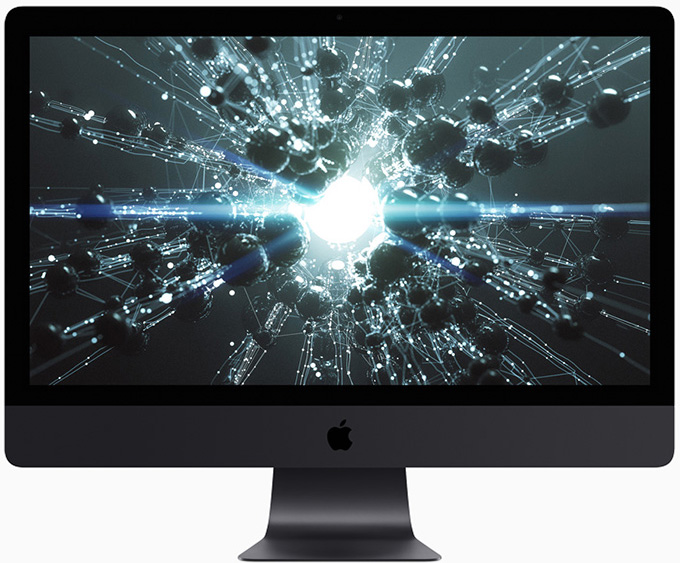
Fresh attention on the iMac Pro i7 4K editing performance has surfaced amid ongoing discussions in creative circles, where professionals revisit older hardware amid Apple’s transition to silicon chips. Renewed curiosity stems from recent coverage highlighting its enduring capabilities for demanding workflows, even as newer models dominate headlines. Editors handling 4K timelines in Final Cut Pro or Premiere Pro find the machine’s Xeon W processor—often configured with 8 or 10 cores—still relevant for playback and exports that once set benchmarks. Thermal management and GPU acceleration keep surfacing in comparisons, prompting questions about viability in 2026 workflows. This spotlight arrives as content creators weigh legacy Intel setups against M-series upgrades, with real-world tests underscoring the iMac Pro i7 4K editing performance’s balance of power and all-in-one design.
Hardware Foundations
Processor Architecture
The iMac Pro i7 4K editing performance hinges on Intel Xeon W processors, starting at 8 cores clocked at 3.2GHz with Turbo Boost to 4.2GHz. Configurations scale to 10 cores at 3.0GHz boosting to 4.5GHz, sharing 19MB to 23.75MB cache across models. These chips prioritize multi-threaded tasks like rendering, where hyper-threading doubles effective threads for smoother timeline scrubbing in 4K projects. Video encode acceleration falls to the Vega GPU rather than CPU Quick Sync, absent in Xeons. Base models deliver solid single-core speeds around 1200 in Geekbench, sufficient for everyday cuts but lagging modern M1 scores near 1700.
Real-world exports show the gap. A 4K Final Cut Pro timeline stabilizes 20-second clips in 7.5 seconds on comparable iMacs, with iMac Pro variants edging ahead by 35-60% in complex effects. Cache size aids sustained loads, preventing bottlenecks in multi-layer 4K edits.
Graphics Capabilities
Radeon Pro Vega GPUs define much of the iMac Pro i7 4K editing performance, with 56 or 64 models packing 8GB or 16GB HBM2 VRAM. OpenCL scores hit 35% higher than prior iMacs, Metal rendering 40% faster, powering DaVinci Resolve color grades on RED RAW. Heaven 3D benchmarks exceed 40fps at 5K native, outpacing Dell Precision rivals at 4K.
In Premiere Pro, 5-minute 4K H.264 projects with LUTs render 45% quicker than 2017 iMacs, though CPU utilization hovers at 25% in Resolve, hinting untapped potential. Vega’s media engine compensates for Xeon encode limits, enabling swift ProRes to H.264 outputs without consumer Quick Sync.
Memory and Storage
Up to 256GB DDR4 ECC RAM across four slots bolsters iMac Pro i7 4K editing performance for 4K multicam timelines. 32GB configs handle 10-bit HEVC playback smoothly, while 128GB variants tackle VFX layers without proxies. ECC error correction suits long renders, rare in consumer iMacs.
1TB SSDs with RAID options yield desktop-class reads, exporting 2:45 4K Final Cut projects in 1:24 versus 4:05 on standard iMacs. Desktop-to-desktop benchmarks confirm minimal thermal throttling impacts here.
Display Integration
The 27-inch 5K Retina panel at 5120×2880 anchors iMac Pro i7 4K editing performance with P3 gamut and 500 nits brightness. Color accuracy rivals external references, ideal for 4K grading where 25% wider gamut than sRGB reveals nuanced tones. Native scaling avoids pixel fuzziness in UHD timelines.
Dolby Atmos speakers enhance audio sync reviews, immersing editors without external monitors. Thunderbolt 3 supports dual 4K externals, extending workspace fluidly.
Thermal Design
Fan curves ramp aggressively under 4K loads, keeping Xeons near boost clocks longer than slim iMacs. Stabilization tasks occasionally lag due to partial resource use, but exports gain from Vega offload. No major throttling noted in 4K H.264, unlike consumer laptops.
Sustained 4K Resolve sessions hit 35% GPU gains, with chassis venting preventing Vega drops.
Software Optimization
Final Cut Pro Efficiency
iMac Pro i7 4K editing performance shines in Final Cut Pro, exporting 2:45 4K projects 58% faster than iMacs—3:47 in Premiere equivalents. 20-second 4K stabilizes process in under 4 minutes for complex clips, leveraging Metal API for real-time playback.
HEVC 4K with effects plays at 5 frames per second analyzed, doubling prior iMac speeds. Multicam syncs handle without proxies on 32GB RAM.
Premiere Pro Handling
Adobe Premiere timelines reveal iMac Pro i7 4K editing performance edges, with 5-minute 4K H.264 exports twice as fast as iMacs on LUTs and grain. Full-res playback drops occasional frames on RAW, but half-res smooths fully.
ProRes upscales to 4K UHD render in under 3 minutes via Media Encoder, OpenCL accelerating Vega.
DaVinci Resolve Tests
Resolve 4K projects show mixed iMac Pro i7 4K editing performance; 35% faster than iMacs on Premiere-like tasks, but occasional Resolve lags on 4K despite low CPU use. RED 4.5K Raven exports triple speed on studio versions.
GPU fusion effects grade 10-bit log fluidly, 42-minute timelines versus two hours prior.
Proxy Workflow Needs
Native 4K H.264 demands proxies on base configs for 60fps, but ProRes plays full-res. Optimized media creation doubles speed over 2015 iMacs.
iMac Pro i7 4K editing performance improves response without eGPUs on i5 peers.
Plugin and Effects Load
LUTs, film grain on dual 4K layers export 2x faster in Premiere, Resolve close behind. AVX-512 boosts vector effects, aiding 3D renders.
Benchmark Comparisons
Versus Standard iMacs
iMac Pro i7 4K editing performance laps 2017 5K iMacs by 60% in FCX exports, 35% graphics. 4K stabilization favors Pro at 4:02 versus 3:14, resource efficiency key.
Premiere 4K gaps widen to 5 minutes saved.
Against Mac Pro Models
Tower Mac Pros trail in FCX 4K by 2x on H.264, iMac Pro leveraging Quick Sync absence via GPU. Cinebench triples iMac scores.
PC Workstation Rivalries
Puget tests show PCs 35-45% ahead in Premiere 4K, but iMac Pro nears on ProRes at half cost. Vega trails RTX in RED, 20% deficit.
Core Count Scaling
10-core iMac Pro i7 4K editing performance gains 5% over 8-core in Resolve, playback doubles. 14-core pushes Cinebench 1,669, unmatched by 4-core i7s.
Export Time Metrics
2min 4K Premiere: 3:47 Pro vs 9min iMac; FCX 1:24 vs 4:05. 5min H.264: 45% uplift.
Real-World Applications
Multicam Productions
iMac Pro i7 4K editing performance manages 4K multicam from Fuji XT3, 10-bit HEVC real-time on external SSDs. Scrubbing hits full speed post-render.
RAW Footage Handling
RED 4.5K/8K RAW debayers swiftly in Resolve, 3x prior speeds. Canon C200 RAW stabilizes without proxies.
Color Grading Sessions
P3 display aids 4K grades, Vega LUT application 35% faster. No frame drops at half-res.
Audio Sync Tasks
Dolby Atmos integrates for 4K mixes, exports sync flawlessly.
Long-Form Exports
15min HEVC timelines process near real-time, M5 peers now faster but legacy holds.
Limitations and Upgrades
Thermal Constraints
Prolonged 4K loads ramp fans, minor throttling in stabilization. Vega sustains better than laptop i9s.
Codec Dependencies
H.264 4K demands proxies at 60fps, ProRes native. Xeon lacks Quick Sync.
RAM Expansion Caps
256GB max suits most, but VFX pushes limits versus modular Pro.
GPU Upgrade Paths
Soldered Vega fixed, no eGPU official support impacts 2026.
Future-Proofing Gaps
Apple Silicon laps multi-core by 2-3x now, software deprecation looms.
The iMac Pro i7 4K editing performance public record paints a machine that punched above its 2017 weight, delivering workstation-grade exports and playback for professionals who optimized workflows around its strengths. Benchmarks confirm advantages in Final Cut Pro and mixed Resolve results, with Vega GPUs bridging Xeon gaps effectively for years. Yet unresolved questions linger on codec evolution—H.264 proxies persist, while ProRes fluency endures. No confirmed paths exist for silicon transitions preserving its all-in-one appeal, leaving users to balance upgrade costs against proven reliability. As 2026 workflows demand 8K and AI acceleration, this hardware’s legacy prompts forward glances toward modular futures, where backward compatibility and raw core counts may yield to unified memory paradigms. Public discourse hints at niche revivals, but broader shifts remain uncharted.